Author: admin

  • human services

    To complete this assignment, select a local, state, or federal policy that targets the form of oppression and discrimination you described in Week 2 (please refer to week 2 assignment at the bottom of this assignment  (for example, the Americans With Disabilities Act (ADA), Veterans Millennium Healthcare Act, Affordable Care Act (ACA), Adoption and Safe Families Act, Medicare, Medicaid, Temporary Aid to Needy Families Act, Social Security Act, or a relevant state or local policy, such as state or local affordable housing policies or health and safety policies related to COVID-19).

    Then, complete the following:


    • Describe the purpose of a currently enacted policy that addresses the social justice problem for a chosen population, using scholarly literature for support.
    • Remember, this policy must be enacted—in other words, it must be passed legislation.
      • Describe the programs and services provided through the policy, using scholarly literature for support.
    • What are examples of the programs and services that are being offered as a result of your chosen policy?
    • Who is the target population for these programs and services?
      • Describe how the policy connects to the chosen social justice problem, using scholarly literature for support.
    • Connect the policy to the social justice problem you selected by giving a brief description of the problem. Is it a new problem, something that has recently arisen, or an old problem that has never been resolved?
      • Describe the historical issues and context that led to the creation of the social problem and policy development.
    • Include information about the voting outcomes for the policy and the legislative leaders who influenced the policy historically and in the present.
    • Include the impact these historical features have had on the policy’s implementation.

    Additional Requirements

    The assignment you submit is expected to meet the following requirements:

    • Written communication:Written communication is free of errors that detract from the overall message.
    • APA formatting: Resources and citations are formatted according to current APA style and formatting standards.
    • Cited resources:A minimum of five scholarly sources. Most literature cited should be current, with publication dates within the past five years.
    • Length of paper:4 typed, double-spaced pages.
    • Font and font size:Times New Roman, 12 point.


    Week 2 Assignment

    Oppression and Discrimination in Veterans’ Mental Health.

    Veterans are highly vulnerable to mental health disparity. They also go through discrimination, inequity, and lack access to care at the same time. This especially happens to individuals from minorities.  Studies have also continuously revealed that Black, Hispanic, and Latinx veterans are more likely to experience the most severe forms of posttraumatic stress disorder (PTSD), depression, and anxiety symptoms than their White counterparts (Nillni et al., 2023).

    Racial discrimination is not the only means of oppression that veterans face. Sexual orientation is a compounding stressor faced by LGBQ+ veterans, such as discrimination in military culture and healthcare environments (Harper et al., 2023). Bisexual veterans in particular report the most psychiatric distress of any group of sexual orientation, and with significantly more acute PTSD, depression, and anxiety than heterosexual veterans (Harper et al., 2023).

    Ethical Considerations and Implications for Social Work Practice

    NASW can help people who work with veterans’ mental health navigate the intricate ethical climate. The main principle that guides social workers to doubt the structural inequality and to advocate equality in terms of access to the services is social justice (NASW, 2021). This responsibility is particularly applicable to veteran care, in which access will be determined by race, income, geography, gender, and sexual orientation. It is the ethical responsibility of social workers to identify and intervene in how these factors contribute to the barriers to mental health treatment.

    Another field of ethical requirement in the NASW Code of Ethics is cultural competence. Social workers should be familiar with the cultures and lives of their veteran clients, with the specifics of military culture that define help-seeking as a sign of weakness (Randles & Finnegan, 2022). The stigma of receiving mental health care, which is based on internalized, envisaged, and externalized stigmatization, is an important ethical obstacle as it makes people unable to obtain the services to which they have the right. Social workers should also undertake the initiative to eliminate the stigma by practicing in a culturally aware manner, engaging in outreach and advocacy (NASW, 2021). Moreover, there is the moral concept of self-determination, which states that the veterans are to be helped to define their needs and the preferred paths of care, as well as the informal channels of help, such as peer networks. The ethical issue has a practice implication of being affirmative, inclusive, and culturally responsive care is not a best practice; it is a duty of the profession. This failure to provide such care endangers to perpetuate the exploitation that social work is meant to eradicate.

    Current Enacted Policies Addressing Veterans’ Mental Health

    There are also several federal level policies in place to govern mental health care amongst veterans. The VA MISSION Act of 2018 made the veterans more accessible to the community providers of care when inaccessible or unavailable VA facilities (Lafferty et al., 2023). The VA MISSION Act has granted veterans to access outside of the VA Care as long as they meet some of the required eligibility provisions, such that the veterans are not geographically and logistically secluded to access mental health care. The Sergeant First Class Heath Robinson Honoring our Promise to Address Comprehensive Toxics (PACT) Act of 2022 further broadened the VA healthcare eligibility to the individuals who had been exposed to toxic substances (McAndrew et al., 2024).

    The VA operates the Veterans Crisis Line, and funds the National Center on PTSD responsible of conducting research and disseminating evidence based treatment of PTSD and other associated ailments. The VA has also developed several LGBTQ+ Veteran Care Coordinators within the centers around the country to reduce barriers in care due to identity. The aim of these coordinators is to provide holistic, supportive care to LGBQ+ veterans, who face barriers unique to them, including having faced discrimination in the military and health care facilities (Harper et al., 2023). In addition, there are the collaborative suicide prevention plans by the U.S. Department of Defense and VA, which is a subset of the National Strategy to Prevent Veteran Suicide since mental health crisis among the veterans require a population-specific response.

    Policy Impact, Limitations and Activism.

    Despite such policy efforts, massive loopholes still exist in attempting to address the intersectional mental health disparities of the veterans. Research has indicated that the policies targeting access have been unsuccessful in mitigating the underlying social factors like discrimination and income inequality leading to mental health disparities in racial and ethnic minority veterans (Nillni et al., 2023). The VA MISSION Act has expanded access theoretically, but the reality of access like transportation, long wait lines, and doubts about civilian ability to take care of veterans remain barriers to effectiveness, particularly among veterans in marginalized groups (Randles and Finnegan, 2022). Moreover, the policies have tend to be designed in a way that favors the average male veteran and female veterans and LGBTQ+ veterans have been underserved. Particularly, bisexual veterans are less willing to obtain formal assistance of medical practitioners and more willing to rely on internet-based sources, which implies that the existing healthcare-driven policies are not able to access this population (Harper et al., 2023).

    Additional policy constraints include community-based mental health services are not funded, longitudinal research investigations of the long-term effects of discrimination on the well-being of veterans, and the absence of a mandatory cultural competency training among mental health service providers who work with various groups of veterans. Effective advocacy strategies that have demonstrated effectiveness are stigma reduction campaigns that incorporate the personal narratives of veterans who have used mental health services, peer support programs that employ military camaraderie as an agent of help-seeking, and healthcare provider training on veteran-specific and identity-affirming care (Randles & Finnegan, 2022). These strategies comply with NASW ethical standards as they focus on the dignity and value of veterans as individuals.

    The main issue with present advocacy activities is that they tend to primarily work at the organizational level without creating the systemic policy change that would help to address the structural determinants of the veteran mental health disparities. The answer to these problems is to initiate macro level advocacy that exerts pressure on laws that requires a cultural competency training program, increased funding to facilitate the conduct of intersectional research, and a policy that makes equity the foundation of VA service delivery. Particular outreach efforts through digital platforms may be particularly helpful among disadvantaged subgroups, such as bisexual veterans, who are likely to be able to find information online (Harper et al., 2023). Lastly, effective promotion of the mental health among veterans should be committed towards addressing the discrimination and inequality that the existing policies, despite being in place, has failed to address.


    References

    Harper, K. L., Herbitter, C., Livingston, N. A., Vogt, D., Iverson, K., Nillni, Y. I., & Galovski, T. (2023). Experiences of discrimination and mental health treatment seeking among LGBQ+ veterans. Psychology of Sexual Orientation and Gender Diversity. https://dx.doi.org/10.1037/sgd0000683

    Lafferty, M., Govier, D. J., Golden, S. E., Disher, N. G., Hynes, D. M., & Slatore, C. G. (2023). VA-delivered or VA-purchased care: important factors for veterans navigating care decisions. Journal of general internal medicine38(7), 1647-1654. https://doi.org/10.1007/s11606-023-08128-0

    McAndrew, L. M., Burgo-Black, L., Hunt, S. C., Kossoudji, A., Mains, K. C., Shuping, E., & Llorente, M. D. (2026). Exposure-informed care: why it’s important and how the veterans affairs does it. Medical Care64(2S), S103-S110. DOI: 10.1097/MLR.0000000000002238

    National Association of Social Workers. (2021). NASW code of ethics. Retrieved From: https://www.socialworkers.org/About/Ethics/Code-of-Ethics

    Nillni, Y. I., Horenstein, A., McClendon, J., Duke, C. C., Sawdy, M., & Galovski, T. E. (2023). The impact of perceived everyday discrimination and income on racial and ethnic disparities in PTSD, depression, and anxiety among veterans. PLOS ONE, 18(9), e0291965. https://doi.org/10.1371/journal.pone.0291965

    Randles, R., & Finnegan, A. (2022). Veteran help-seeking behaviour for mental health issues: a systematic review. BMJ mil Health168(1), 99-104. https://doi.org/10.1136/bmjmilitary-2021-001903
  • INFECTIOUS DISEASE AND NATURAL DISASTER

    Climate change has led to rising flood risk from hurricanes and monsoons to torrential rains, bringing infectious diseases in their wake

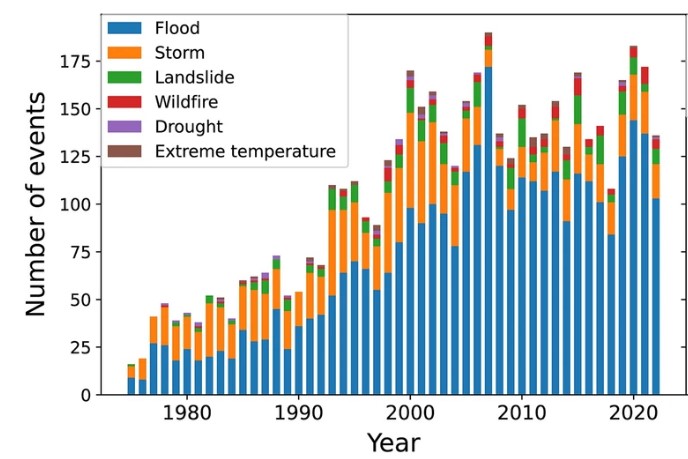
    As the earth warms due to climate change, its impacts — record-breaking temperatures, melting glaciers, warmer oceans — create ideal conditions for extreme weather events. From heatwaves and droughts to hurricanes and floods, natural disasters are increasing in frequency and intensity. In 2020 alone, there were 132 extreme weather-related disasters, affecting nearly 52 million people and causing 3,000 deaths.

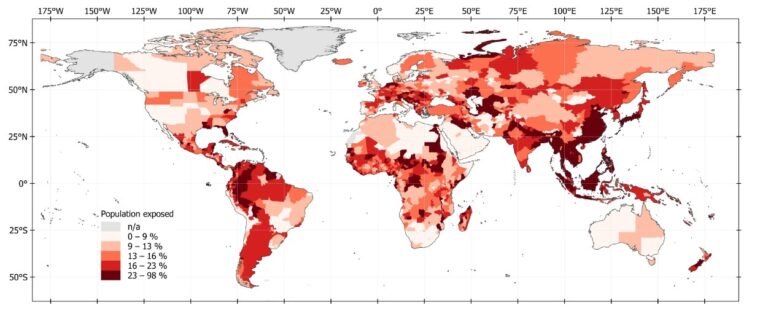
    Floods are the most common natural disaster, representing approximately 4050% of all events. More than 1.65 billion people were affected by floods between 2000 and 2019. Nearly a quarter of the world’s population is exposed to significant flood risk, of which almost 90% are in low- and middle-income countries. As floods become more frequent, annual flood exposure is estimated to increase 14-fold over the next 75 years.

    Natural disaster events, 1975–2022

    Natural disaster chart

    Population exposed to flood risk

    Flood risk map

    Floods present significant economic impacts resulting from shuttered facilities and business interruptions. Every year, floods cause $40 billion in damage globally, which has amounted to more than US$1.3 trillion in economic damages from 1990 to 2022. China sustained the most economic damage during that period at US$442 billion, followed by the US at US$135 billion. The economic risks and impacts, which can leave businesses with no choice but to shut their doors, are often underestimated.

    And once the worst of the weather has passed, a second wave of damage emerges: infectious diseases. From waterborne and vector-borne diseases to respiratory and cutaneous infections, these outbreaks represent a significant post-flood threat. Damaged water treatment plants and overflowing sewage systems can exacerbate infectious disease risks. Contaminated water and food, poor sanitation, population displacement, and overcrowding, along with interrupted vaccination and vector-control programs and disrupted healthcare services, allow pathogens to more easily ravage communities. This edition of Outbreak Insider examines the infectious diseases that often spread in the aftermath of floods.

    3 Top Takeaways

      1. Floods are the most common, and deadly, natural disasters around the world. Affecting billions of people globally, the impact of floods is set to worsen as exposure is projected to increase 14-fold by the year 2100.
      2. Infectious diseases are among the most concerning post-flood threats. From waterborne and vector-borne diseases to respiratory and cutaneous infections, health risks emerge within weeks and persist for up to two years following a disaster.
      3. Flood preparedness and risk management are the focus in reducing health effects. As flooding increases in frequency and intensity around the globe, measures to prepare, respond, and recover from events should be prioritized to ensure timely and widespread action when disasters strike.

    Opening the floodgates to infectious diseases

    In the wake of flooding, communicable disease risk significantly increases. When people move to safer locations, direct contact with contaminated water and lack of sanitation leads to skin infections and waterborne infectious diseases, such as E. coli, hepatitis A and E, and Vibrio-related diseases including cholera. At the same time, rodent-borne diseases including leptospirosis emerge due to exposure to rodents or urine-contaminated soil, water, or food. In oft-overcrowded emergency shelters, measles, meningitis, and acute respiratory infections can flourish. Standing water also gives rise to expanded vector breeding grounds and mosquito-borne diseases, including dengue, malaria, and Zika virus.

    Children, older adults, and women — especially if pregnant — are at increased risk for poorer health outcomes of infectious diseases during disaster events. Risks are exacerbated in lower-income locations with limited resources for emergency response and public health. Disease hazards begin emerging as early as two weeks post-disaster, but can persist for two years after an event. These events also disrupt management of other endemic and underlying health conditions.

    The infectious disease hazards of floods are not just a public health issue but an enterprise risk issue. Businesses must anticipate the logistical and financial needs not only for flood damage repair but also for health risks.

    Case 1: Infectious disease and hurricanes in the United States

    Over time, flooding has become increasingly more common along the US coastline, where more than 40% of Americans reside and more than $1 trillion in infrastructure is at risk. In 2024, infrastructure damage from hurricanes Helene and Milton are expected to exceed $50 billion, joining the ranks of Hurricanes Katrina (2005) and Sandy (2012) in terms of economic devastation.

    In the first few weeks following hurricanes, exposure to floodwater increases cases of waterborne diseases such as E. coli, Legionnaires’ disease, and cryptosporidiosis, as well as Vibrio vulnificus, a flesh-eating bacteria found in warm water. After Hurricanes Helene and Milton moved through, around 40 cases of Vibrio vulnificus were reported in Florida. To date, the state has seen a total of 81 cases and 16 deaths in 2024, exceeding the 74 cases reported in 2022 — the year Hurricane Ian struck Florida. Another flesh-eating bacteria, Streptococcus pyogenes, led to the death of a woman in Houston after exposure to Hurricane Harvey’s floodwaters in 2017.

    In addition, the standing floodwater left behind by hurricanes allow arboviruses like West Nile and dengue to spread. Cases of West Nile virus rose in Louisiana and Mississippi following Hurricane Katrina, as did other airborne pathogens: nearly 50% of inspected homes across New Orleans had visible mold growth, which contributed to respiratory infections such as toxic pneumonitis.

    Case 2: Infectious disease and typhoons in the Philippines

    In the last month, the Philippines has been hit with six back-to-back tropical cyclones moving through the country’s northern regions and affecting approximately 10 million people. At least 171 people have died, hundreds of thousands of people have been displaced, and many homes have been damaged or destroyed. This succession of storms was atypical for the Philippines, and the extensive infrastructure damage has yet to be fully assessed.

    Like hurricanes in the US, typhoons result in large areas of stagnant water, providing an essential prerequisite for mosquitoes to breed — and spread infectious diseases. BlueDot released an event alert on September 16 about spiking dengue cases in the Philippines amid several tropical storms. From October 6-19, over 20,000 cases were reported, and another 17,000 were reported from October 20-November 2. By November 16, the country had recorded nearly 341,000 cases throughout 2024, which was an 81% increase compared to the same period in 2023.

    Following Typhoon Carina in August, a rise in leptospirosis cases triggered the activation of the Surge Capacity Plan across hospitals in the National Capital Region. As of October 5, more than 5,800 cases have been reported this year, which is a 16% increase compared to the same period last year. Over time, leptospirosis cases have been increasing in the Philippines, largely due to the many water-related natural disasters that strike the nation.

    Case 3: Infectious disease and flooding in Pakistan

    Pakistan has been identified as the world’s fifth most vulnerable country to long-term climate change. In 2022, one-third of the country was submerged in widespread flooding following monsoon rainfall. The disaster affected over 33 million people, damaged more than 2 million homes, and destroyed more than 2,000 healthcare facilities. Roads, railways, and other infrastructure were also heavily damaged. The total damages are estimated to exceed US$15 billion, marking a substantial hit on the already fragile economy.

    Following the 2022 flood, the country saw its worst malaria outbreak since 1973. At least 2.6 million cases were reported, a five-fold increase from the 500,000 cases a year prior — though many more cases were suspected. An increase in dengue was also observed, with nearly 42,000 confirmed cases in the country as of October 11, 2022. Although both mosquito-borne diseases are endemic to the nation, disrupted vector control programs and a shortage of mosquito nets and repellants amidst the flood devastation contributed to increased vector-borne outbreaks.

    Waterborne diseases, including cholera and typhoid, also increased due immense population displacement, poor sanitation, lack of clean water, and overcrowding. An analysis of suspected infectious disease notifications to Pakistan’s Integrated Disease Surveillance and Response (IDSR) system between September and December 2022 identified approximately 340,000 cases of acute diarrhea, 16,000 cases of typhoid, and 14,000 cases of suspected cholera. Skin, eye, and respiratory infections were also widespread. With several concurrent outbreaks, the healthcare system faced challenges in providing adequate treatment given the lack of resources.

    Moreover, as BlueDot reported back in May 2023, health officials in Sindh and Karachi issued an advisory warning about increasing trends with respect to typhoid drug resistance (XDR-TF). Cases of XDR-TF have also been identified in Southeast Asia and eastern and southern Africa. Typhoid drug resistance is a matter of global concern given the increased risk of outbreaks due to flooding.

    On our radar

      • Vaccine-derived Polio in Poland: Last week, poliovirus type 2 was detected in wastewater samples in Poland, where the last case of wild-polio was recorded in 1984. The 2023 vaccination rate among 3-year-olds was 86%, falling below the 95% level needed to prevent spread. In response, sewage testing and surveillance of acute flaccid paralysis in children have increased, and vaccine stocks and information campaigns have been bolstered.
      • Avian influenza (H5N1) in North America: A child in California tested positive for avian influenza (H5N1) last week, following on the heels of reports of the first human H5N1 avian influenza case in Canada, in a teenager in British Columbia who remains in critical condition In both cases, the sources of exposure remain unknown. Most human cases to date are in farmworkers, but experts are concerned about what these two cases may mean for spillover risk and viral adaptation supporting more efficient human infection.

    As natural disasters become a bigger threat around the world, disaster management systems are vitalStrong public policies, vector-control programs, surveillance, and public awareness campaigns are some strategies to reduce the health effects of flooding and other events. Given that infectious diseases claim the lives of more than 700,000 people in the acute phase following a natural disaster, these measures can prevent serious illness and death, especially in lower-income countries who are most affected by outbreaks.

    “The hardest hit nations also happen to have the right conditions to allow for the flourishing of infectious diseases,” says Andrea Thomas, PhD, BlueDot’s head of epidemiology. “But with climate change, the conditions could be ripe for the perfect storm of infectious diseases anywhere in the world.”

    Leveraging technology and subject matter expertise, BlueDot tracks infectious disease outbreaks around the globe as they are happening. To keep updated, sign up here to receive every edition of BlueDot Outbreak Insider.

  • What are the best websites to play Unblocked Games at school or work?

    I am looking for safe and reliable platforms where I can play Unblocked Games without restrictions. Which websites offer a variety of unblocked games, including action, puzzle, and strategy genres, that are accessible on school or workplace networks? Are there any tips for finding new unblocked games online?

  • What are the best websites to play Unblocked Games at school or work?

    I am looking for safe and reliable platforms where I can play Unblocked Games without restrictions. Which websites offer a variety of unblocked games, including action, puzzle, and strategy genres, that are accessible on school or workplace networks? Are there any tips for finding new unblocked games online?

  • Take the time to become familiar with your profession’s code as a kindergarten teacher of conduct and ethics. Various fields may also have their own codes that establish overarching principles to help guide your day-to-day work.

    Discussion Post 2

    Take the time to become familiar with your profession’s code as a kindergarten teacher of conduct and ethics. Various fields may also have their own codes that establish overarching principles to help guide your day-to-day work.

  • descriptive statistics (means, standard deviations, frequencies), graphic presentation, reliability and validity, and tests of significance;

    The final paper should resemble a scientific journal article in structure, style and format.  Results presented should include some or all of the following:

    Quantitative: descriptive statistics (means, standard deviations, frequencies), graphic presentation, reliability and validity, and tests of significance;

    Qualitative: Writing a method section for a proposal or study for qualitative research partly requires educating readers as to the intent of qualitative research, mentioning specific designs, carefully reflecting on the role the researcher plays in the study, drawing from an ever-expanding list of types of data sources, using specific protocols for recording data, analyzing the information through multiple steps of analysis, and mentioning approaches for documenting the methodological integrity or accuracy—or validity—of the data collected.

    Mixed Method: a combination of both Quantitative and Qualitative Methods

    The first four steps will be assignments throughout the semester. The final paper will be due at the end of the semester.

    Your assignment should be typed, double-spaced, 12-point font and formatted per the APA guidelines. Each essay should be between 5000-8000 (10-15 pages –excluding the title and reference pages) words in length, with one-inch margins on all sides and page numbers.  Please do not vary your font, font size, kerning, spacing, or punctuation to overcome the length requirement, as this is readily apparent to your instructor.

  • *Reflect on your personal journey with literacy and how it has shaped your identity, relationships, and opportunities. In your narrative, explore key moments or experiences that have influenced your reading, writing, or communication skills.

    *Reflect  on your personal journey with literacy and how it has shaped your  identity, relationships, and opportunities. In your narrative, explore  key moments or experiences that have influenced your reading, writing,  or communication skills. Consider the role that cultural, familial, and  educational contexts have played in your development as a literate  individual.

    As you discuss these experiences, incorporate at least three  in-text citations from academic sources that explore literacy, learning,  or language development to provide a deeper understanding of your  journey. Be sure to integrate these citations naturally into your story,  linking personal reflections to broader literacy theories and  perspectives.

    In your summary, address the following:

    1. Describe early experiences that shaped your relationship with literacy.
    2. Analyze how literacy has influenced your personal and academic growth.
    3. Discuss challenges you have faced in developing literacy and how you overcame them.
    4. Reflect on how literacy continues to shape your life today.
  • Enhancing Nursing Practice Through Informatics and Technology

    Nursing informatics and APRN role As the information technology (IT) revolution continues and electronic devices and systems become integral to how healthcare is delivered in every country, there is an urgent need for health professionals to have adequate knowledge and skills to enable them to utilise informatics in all settings. Health IT encompasses a huge range of technologies that are now more sophisticated and interconnected than ever before and can deliver numerous benefits such as improving the quality of patient health information, supporting clinical decision making and facilitating the coordination of care across multidisciplinary teams of health and social care professionals in acute and primary care settings, among others (Ball et al., 2011, as cited in O’Connor et al.,2017). Technology is also becoming more common as a way to deliver education to students with diverse learning needs in academic and clinical settings, as it offers a flexible means to deliver teaching and assessment that is convenient, interactive, and engaging for learners (Button et al., 2014; O’Connor and Andrews, 2015). Furthermore, IT is also widely leveraged to collect, analyse and manage biomedical and clinical research data that helps evaluate interventions in healthcare and underpins evidence-based practice (Embi and Payne, 2009). Additionally, as the fields of education and research have historically kept their core focus on theory instead of innovations, as a result some educators and researchers have been slower to develop technological knowledge and abilities, which means they cannot make the best use of electronic tools and applications in their respective roles (Barnard and Nash, 2005; Fetter, 2009). This has knock-on negative implications for patients, clinicians and students in every area of healthcare (Pravikoff et al., 2005; Mashiach Eizenberg, 2011). As technology underpins all three legs of the proverbial stool i.e. education, research and practice, nurses must be adequately trained in informatics O’Connor, S., Hubner, U., Shaw, T., Blake, R., & Ball, M. (2017). Time for TIGER to ROAR! Technology Informatics Guiding Education Reform. Nurse Education Today, 58, 78-81. https://doi-org.ezp.twu.edu/10.1016/j.nedt.2017.07.014 2. Informatics in nursing refers to the integration of information science, computer science, and nursing science to manage and communicate data, information, knowledge, and wisdom in nursing practice. It enhances decision-making, patient care, and nursing education by leveraging technology and data systems.The development and advancement in the use of technology in health care directly impact nursing, the nursing profession, and, obviously, nursing education. Nurses are the key personnel in introducing, implementing, and using technology in clinical practices, such as understanding and acting upon the results of patient-related sensors and monitoring equipment in addition to the effective use of electronic patient records (Nes et al.,2021). Technological literacy is defined as “the ability to effectively use technology to access, evaluate, integrate, create and communicate information to enhance the learning process through problem- solving and critical thinking” (Estes, 2017, p. 77). Nursing students need technological literacy in order to become proficient and competent and simultaneously to develop their capacity for critical thinking related to the use of technology in education and the profession (Raman, 2015). Nurse educators as well as practitioners and students will need to cultivate techniques for dealing with the enormous amount of new information, concepts, and skills related to technological development (Jamshidi et al., 2012). Nes, A. A. G., Steindal, S. A., Larsen, M. H., Heer, H. C., Lærum-Onsager, E., & Gjevjon, E. R. (2021). Technological literacy in nursing education: A scoping

  • Scope of Psychiatric Mental Health Nursing Practice Advanced Practice Competencies 2. Key Concepts to Study • Disparities and barriers to mental health care. •

    : Scope of Psychiatric Mental Health Nursing Practice Advanced Practice Competencies 2. Key Concepts to Study • Disparities and barriers to mental health care. • The actions the PMHNP can take to reduce disparities and decrease the drop out rate from mental health care. • Rutgers University and John Hopkins psychiatric nursing program. • The role that Medicare and Medicaid had in deinstitutionalization. • Comorbidity’s role in serious mental illness and influence on lifespan • Aspect of the PMHNP role – examine o Psychotherapy o Case management o Education o clinical supervision   • Components of the Consensus Model • Focus on federal priorities in addressing substance abuse treatment • Populations at risk for substance abuse. Great concern for adults over the age of 50. • The PMHNP and ethical principles o Advancement of the nursing profession o commitment to the healthcare consumer o contribution to healthcare environments o collaboration to meet healthcare needs • Statistics and the impact of mental illness • PMHNP role • case management • advocacy for the healthcare consumer • commitment to the healthcare consumer • responsibility and accountability for practice • PMHNP standards of practice competency – know – this is a very large part of the examination • The scope and standards of professional nursing practice defines its boundaries and informs society about the parameters of nursing practice and the expectations of competencies to be demon

  • Examine the Scope and Standards of Psychiatric Mental Health Nursing Practice Advanced Practice Competencies.

    Examine the Scope and Standards of Psychiatric Mental Health Nursing Practice Advanced Practice Competencies.